A good place to start is with a definition.
windeeeliciousness
1. (adjective) selfish and malicious.
2. (noun) The following short fable that will take less than two minutes
to read and comes with a disclaimer*.
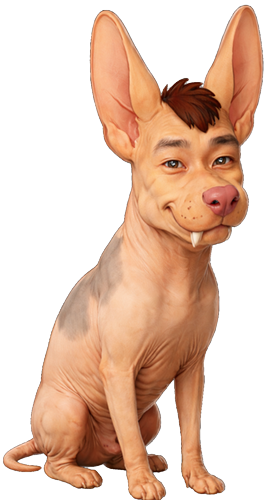
It’s not my fault, I am not responsible, it wasn't my choice
to be cast into this world, a skinny mutt with no butt and a rat's
tail. I wish I had a butt, if I had a butt maybe I could get more people
to give me things.
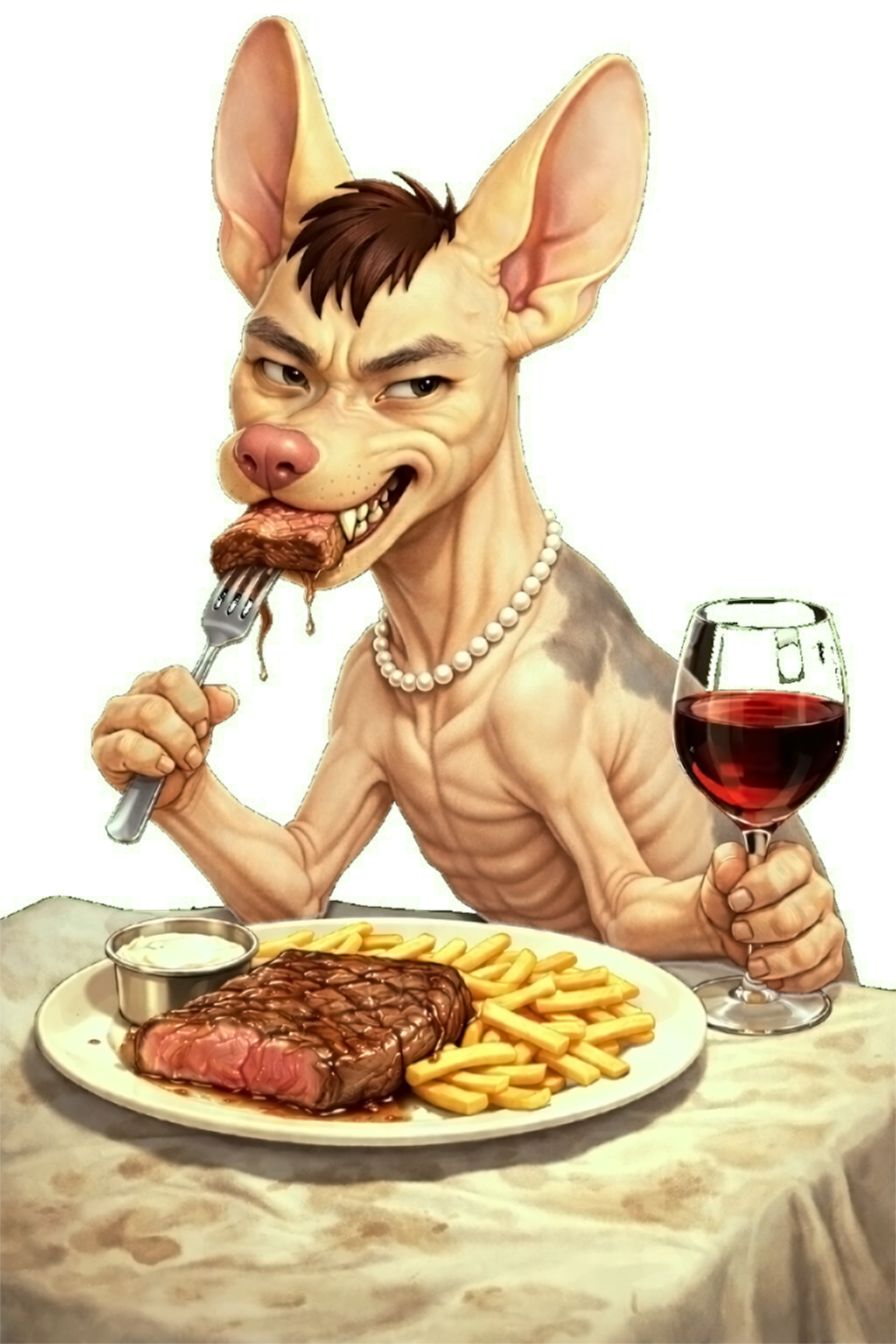
I was fed well, fine cheeses, paté and soup of oxtail so the skinny
didn't last and i had some gas. A Phoung thought the gas made me
windelicious, the name stuck like a tattoo because it fit so well. My
farts came from the food, keep reading to learn where the maliciousiness
came from.
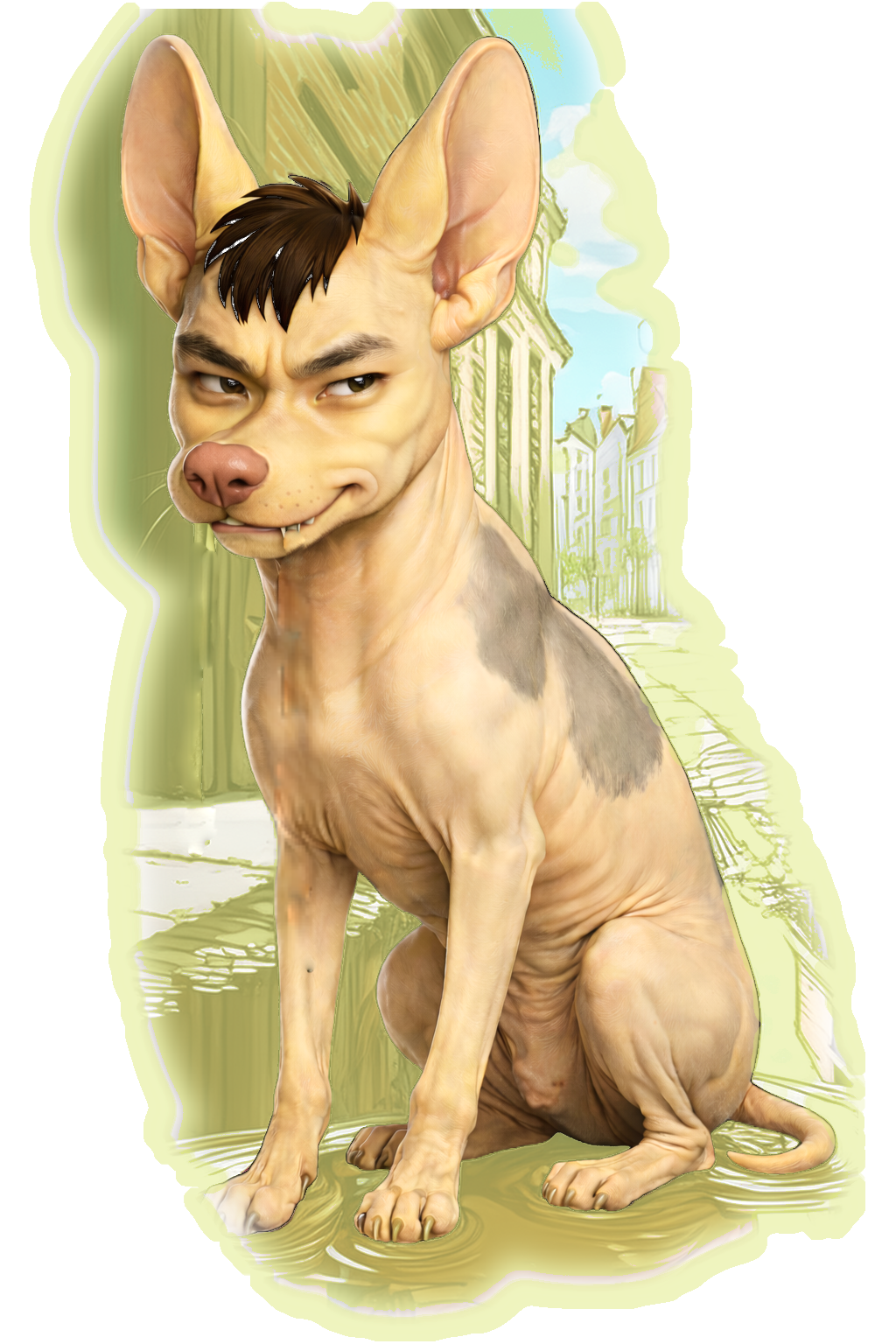
My mother and sister were fine but my father cared only for himself that
made him a cruel tyke who left piles whenever he liked. One day he left a
particularly offensive pile on a bed and was rewarded with a newspaper
across the head. That made him even more selfish and mean. He
didn’t learn from it but I did, then I fled.
Once I was on my own, I pursued the thing I loved most in the world:
shoes. I loved their shine. I loved their scent. I loved the way good
leather felt between my teeth. If I ever felt devotion to anything beyond
myself, it was to shoes.
One afternoon I saw a magnificent pair being worn by a man walking down
the street. They were exactly the sort of shoes I dreamed about. So I
widened my eyes, lifted my ears, wagged my tail, and put on the saddest
expression I could manage.
The performance worked. The man took me home.While I ate the free meal he
provided, he put the shoes away. Unfortunately, I did not see where he
hid them. That meant I needed to stay.
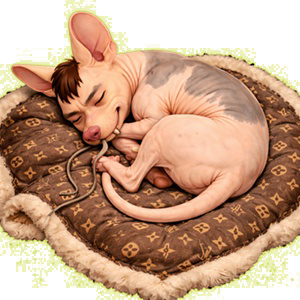
The arrangement suited me. The man fed me well. He took me on outings. He
let me ride in his car. He gave me a warm place to sleep. He treated me as
though I mattered.
I enjoyed every benefit he provided. None of it changed my purpose. Every
day I searched for those shoes.
To maintain the illusion, I behaved myself. I acted grateful. I acted
loyal. I acted friendly. I kept my worst impulses under control. Even so,
a little of my nature escaped from time to time, much as an unpleasant
odor escapes from a poorly sealed room.
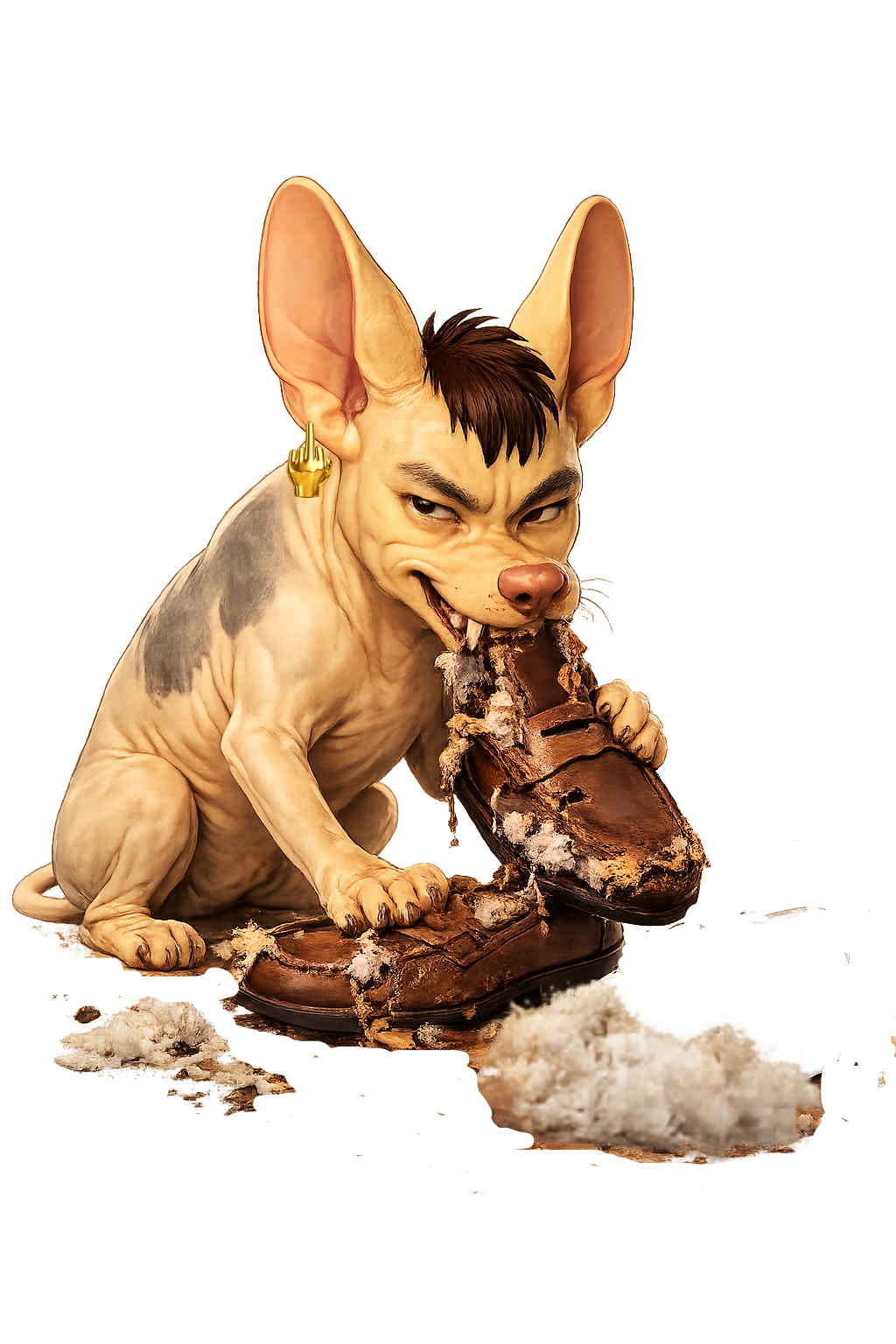
Eventually I found the shoes. I tore them apart with great enthusiasm.
Then I waited. I expected outrage. I expected anger. I expected a
spectacle
worthy of my efforts.
Instead, when the man found the ruined remains of his favorite shoes, he
looked sad. Only sad. The reaction irritated me. His sadness left me with
a problem. It is much easier to justify hostility when the other party is
angry. It is harder when they are merely disappointed.
So I invented a solution. I decided the man's sadness was the
offense.
Who was he to feel hurt? Who was he to expect gratitude? Why should his
disappointment interfere with my freedom to do whatever I pleased?
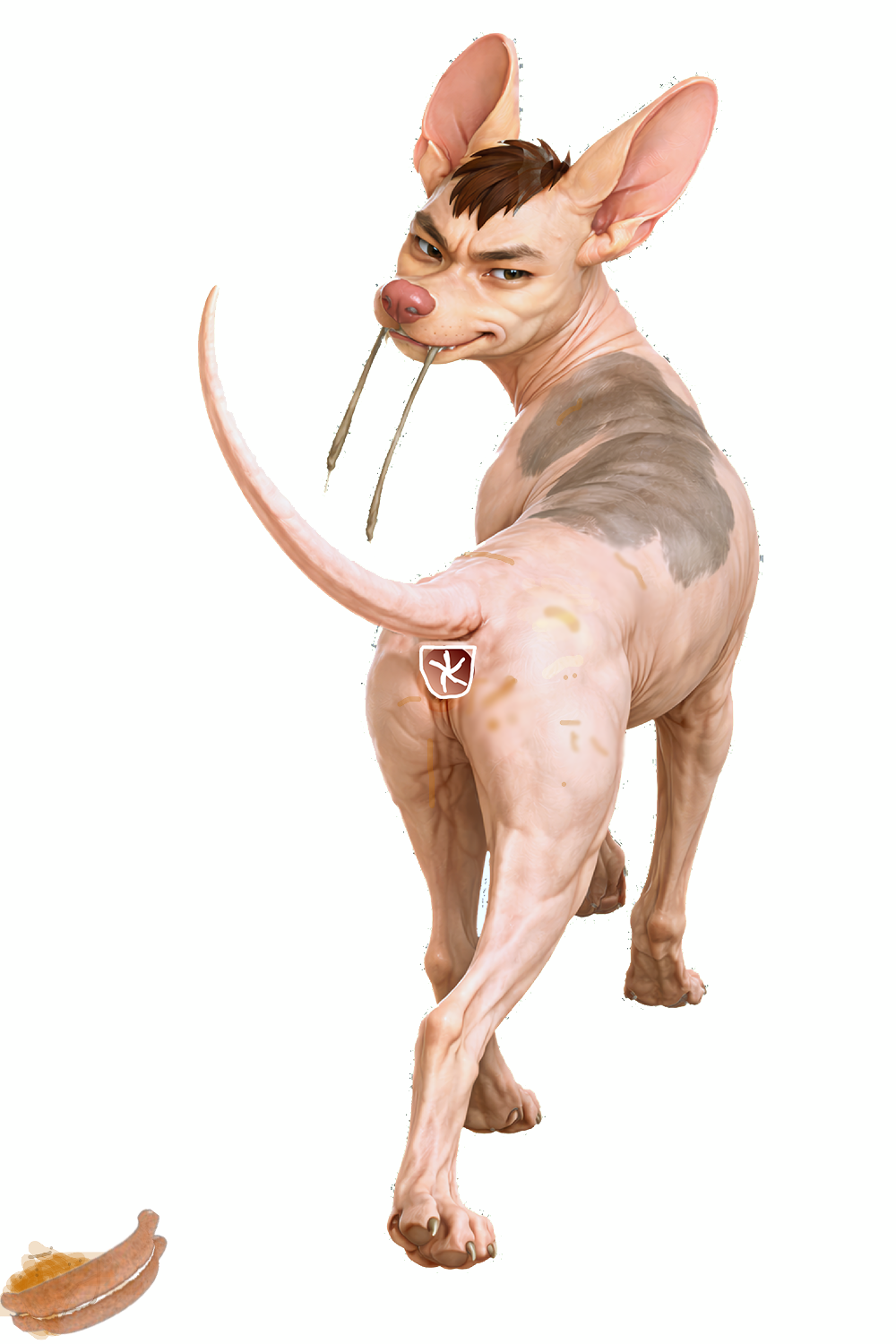
The reasoning was absurd, but it served its purpose. The man became the
villain. I became the victim. Having settled the matter to my
satisfaction,
I bit him hard on the hand. Then, before leaving, I left a pile of poop
on his bed.
You see, my flatulence came from rich food. My malice came from my father.
In the end I had become exactly what he was: a creature willing to harm
those who cared for him simply because he could.
*
This is a work of pure fiction, any resemblance to actual persons,
living or
dead,
or actual events is coincidental.
Windeliciousness or Antisocial Personality Disorder (ASPD) is a
personality disorder characterized by a persistent pattern of disregard
for the rights, feelings, and autonomy of other people.
Typical presentations vary, but common patterns include:
- Repeated violation of social norms or laws
- Chronic lying
- Theft or fraud
-
Impulsive behavior such as impulsive purchases
-
Deceitfulness and manipulation
-
Using charm strategically
-
Exploiting others for money
-
Frequent rationalization of harmful behavior
-
Maintaining different personas for different people
-
Low empathy or shallow remorse
-
Others’ sadness or distress may create discomfort and
irritation
-
Limited concern for people harmed by their actions
-
Minimization of consequences (“they deserved it,”
“not a big deal”)
-
“Torching” the relationship before leaving
-
Impulsivity and risk-taking
-
Reckless driving
-
Substance misuse
-
Reckless financial decisions
-
Chronic irresponsibility
-
Failure to honor debts
-
Unstable relationships tied to exploitation
-
Superficial social functioning
-
Some individuals appear highly socially skilled
-
Confidence or charisma used to mask exploitative behavior
-
Transactional interpersonal relationships
-
Irritability and aggression
-
Frequent fights
-
Threats or coercion
A windelicious may not
show all of those traits. For a diagnosis of ASPD
the DSM-5 requires 3 of the 7 diagnostic criteria, and that the person be
older than 18, and have engaged in a pervasive pattern of disregard for
others since age 15.
For example, someone might be a windelicious if they:
- Lie chronically,
- Exploiting others for money,
- Limited concern for the feelings of those they exploit,
- Torch friendships
Even though they are not:
- Physically aggressive,
- A reckless driver,
- Abuse substances,
- Make threats
How well people with ASPD function largely depends on their intelligence.
Some
individuals with ASPD are low-functioning and end up getting arrested
repeatedly,
can not keep a job or fall into substance abuse. Windelicious are
high-functioning individuals with steady jobs, function well socially and
present
as well-adjusted people. However, their antisocial traits show up in lack
of long
term intimate relationships, repeated betrayals, lack of accountability,
dishonest
dealings, exploiting others then burning the relationship.
Many traits of ASPD overlap with OCD in that both include control,
impulsivity and
rigidity. However, unlike ASPD, OCD often includes excessive guilt and
feeling of
responsibility.
A windelicious does not recognize their behaviors as unethical, they show
a lack of remorse, and they do not accept responsibility for
their harm they cause.
There does seem to be a biological component to ASPD, twin and adoption
studies
show Windeliciousness has moderate heritability. But there is also
evidence for
environmental contributions such as exposure to violence, unstable
attachment and
parental criminality.
Unfortunately Windelicious seldom seek treatment of their own accord
because they
do not see themselves as the problem. To them the problem is other
peop's emotions or other people not behaving in a way that benefits
the
Windelicious.
People with low functioning ASPD may enter treatment through external
pressures like courts or due to relationship crises. While the crimes,
such a fraud,
that high functioning Windelicious commit, are unlikely to result in
punishments
that require treatment.
The treatments for ASPD that exist have had limited success. That does not
mean
windelicious is a hopeless case, some windelicious get less disordered
with age.
A Peter Pan windelicious hopes never to grow up and will continue their
antisocial
behavior into their 30s.
References
American Psychiatric Association, ed. (2022). Diagnostic and
Statistical
Manual of Mental Disorders, Fifth Edition, Text Revision (DSM-5-TR).
Washington, DC, USA: American Psychiatric Publishing.
https://doi.org/10.1176/appi.books.9780890425787.x18_Personality_Disorders
Hare, R. D. (2003). The Hare Psychopathy Checklist–Revised (2nd ed.).
Multi-Health Systems.
Gibbon, S., Duggan, C., Stoffers, J., Huband, N., Vollm, B. A., Ferriter,
M.,
Lieb, K., & Cullen, A. E. (2020). Psychological interventions for
antisocial personality disorder. Cochrane Database of Systematic
Reviews,
2020(9), Article CD007668.
https://doi.org/10.1002/14651858.CD007668.pub3
Bateman, A., O’Connell, J., Lorenzini, N., Gardner, T., &
Fonagy, P.
(2016). A randomised controlled trial of mentalization-based treatment
versus
structured clinical management for antisocial personality disorder in a
community setting. BMC Psychiatry, 16, 304.
https://doi.org/10.1186/s12888-016-1000-9
Wilson, H. A. B. (2014). Does psychotherapy reduce recidivism in adult
male
offenders with psychopathy and antisocial personality disorder? A
meta-analysis.
Aggression and Violent Behavior, 19(5), 433–439.
van den Bosch, L. M. C., Verheul, R., Schippers, G. M., & van den
Brink,
W. (2018). Treatment of antisocial personality disorder: Development of
a
practice-focused framework. Clinical Psychology Review, 62, 72–83.
Fonagy, P., Bateman, A. W., & colleagues. (2025). Mentalisation-based
treatment for antisocial personality disorder: Current evidence and future
directions. The Lancet Psychiatry. Advance online publication.
Critique of Windelicious: A Fable
On its surface, Windelicious operates as a piece of micro-fiction, but its
true genre is myth-making. Written to provide a fictional origin
story for a sociopathic character. Rather than giving the character an
idealized, glamorous backstory, the author uses bathos—shifting from the
world of luxury to the base world of bodily functions.
The psychology of the Windelicious character centers on calculated
exploitation, driven by a hyper-fixation on luxury and selfishness.
Despite
inhabiting the body of a helpless creature, the character possesses the
psychological profile of a classic, Machiavellian con artist.
Ultimately, Windelicious is a highly successful piece of internet-era
satire. It uses the structural economy of a classic fable to deliver a
sharp, funny, and unforgettable modern character study.
Linguistic Deconstruction
The core of the fable's literary success lies in its linguistic
reinvention. The author deconstructs the portmanteau "Windelicious."
While a reader might initially expect a combination of "Win"
and "Delicious," the narrative redefines it through
"wind" (gas) and "malicious." By cementing this as an
adjective meaning "farty and malicious," the author strips the
internet handle of any sterile, curated aesthetic, grounding it instead in
the raw, messy reality of comedic fiction.
The Absurdist Conclusion
The narrative shift in the final act moves from physical comedy to
absurdist crime. By revealing that the dog’s true malice is found
in "stealing people's leather shoes," the story embraces
the surreal. The leather shoe theft serves as a final, brilliant nod to
the creator's real-world fashion background, looping the fiction back
into reality.
Antisocial Personality Disorder
Sociopathy is heavily driven by environmental factors and trauma, whereas
psychopathy or ASPD often carries a strong genetic component.
- The story reveals that the Windelicious's father was a "cruel
tyke that cared for no one" and a "heartless bloke who would
gladly burn anyone who cared about him."
- The father's passes on abusive behavior after he is "struck hard on
the head with a newspaper." Windelicious passes that on as
the emotionally abusive behavior he engages in after he is finished
using people.
-
Rather than developing normal behaviors, Windelicious observes this
stinky behaviors, "learned a lesson," and immediately escapes into
a life of manipulation. His malice is an adapted survival mechanism
learned from a toxic parental figure.
High Functioning Deception (The Mask of Sanity)
People with ASPD often struggle with impulse control and frequently
landing themselves in legal trouble due to erratic behavior. Windelicious,
however, executes highly organized, premeditated operations. He displays
a chilling "mask of sanity" by successfully pretending to be a
normal to gain access to a target's home, food, and money.
This level of patient, transactional manipulation is a hallmark trait of
a calculating sociopath.
Complete Lack of a Moral Compass
The author explicitly notes that the "windeliciouses of this
world" have absolutely no morals. The narrative states that
Windelicious is "devoted to [nothing] other than himself." He
views human beings as "ignominious crap to be used" and
systematically repays kindness with "lies, disrespect and
other malicious... behaviors."
The Final Societal Allegory
The text elevates Windelicious from a simple bad creature to a macro-level
sociopathic archetype. By concluding that a "windelicious" can
turn up anywhere—even becoming the "U.S. president"—the
author confirms that Windelicious is a literary stand-in for human
narcissistic sociopathy, where charm and apparent vulnerability are
weaponized to extract money and favors, and when extraction ends, reversed
to burn their victims to make them go away.
Fables About Deceptive Tricks & Scheming
The Lazy Horse and the Salt Sacks (Traditional): A lazy horse discovers
that if he accidentally slips while crossing a river, the salt sacks on
his back dissolve and make his load lighter. He repeats the trick
deliberately to avoid work. To teach him a lesson, his owner secretly
packs the sacks with cotton. When the horse takes another intentional dive,
the cotton absorbs the water, making the load unbearably heavy.
The Moral Connection: Just like Windelicious holding in his gas,
using tricks and fake behaviors to get what you want will eventually backfire.
The Fox and the Rooster (Aesop): A wily fox uses flattery and charm to
convince a rooster to come down from a high tree branch. The clever
rooster catches onto the deception and tricks the fox right back by
claiming a pack of hunting hounds is approaching.
The Moral Connection: Pretending to have sweet intentions for personal
gain rarely works against a smart opponent.
The Hungry Fox: A Fable Told in Rhyme (Cole Adams): A modern, lighthearted
book of rhyming chapters that follows a mischievous fox as he encounters
wise and witty animal neighbors throughout a forest. Each encounter uses
playful dialogue and lyrical charm to teach the fox a lesson about greed and behavior.
The Monkey and the Leopard (Jean de La Fontaine): A classic rhyming fable
where a flashy leopard tries to hustle a crowd out of their money by
bragging about his beautiful coat. A clever monkey out-shines him by
performing witty, intelligent tricks, showing the crowd that a clever
mind is worth much more than a pretty exterior.